1. Why do I need anti-sweat door heaters for my refrigerated cases?
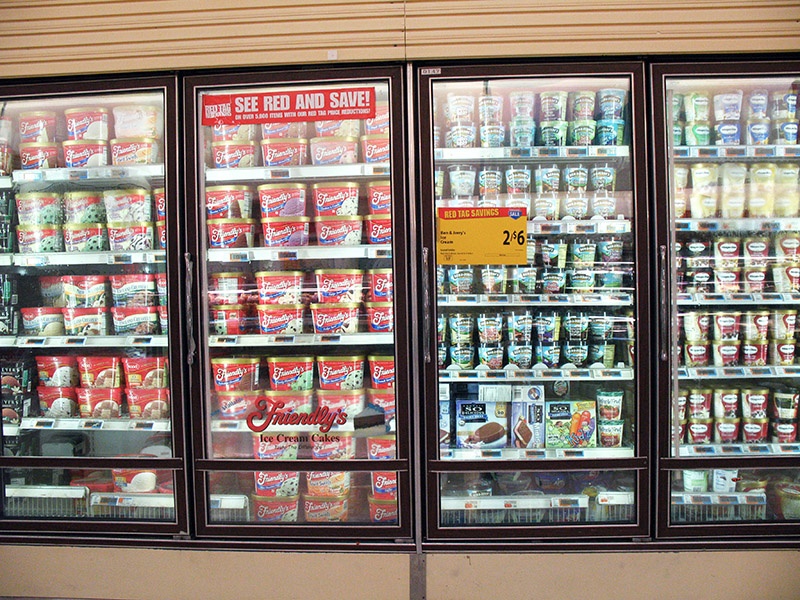
Surface condensation can form on cooler and freezer glass doors and frames. Just like a cold can of soda on a warm day, the cool surface of a glass or metal door on a refrigerated space can attract condensation, especially during periods of high humidity. In addition to fogging up your doors and obscuring product, condensation creates the potential for puddles on the floor, corrosion of door frames, mold or mildew around door gaskets, and deterioration of seals and gaskets around the door, frame and glass.
To prevent these condensate related problems, manufacturers include electric heaters in the frames, doors and sometimes in the glass of cooler and freezer doors. These anti-sweat door heaters keep the glass and frames clear of condensation by raising the surface temperature of the door above the dew point in your store.
2. What if the humidity levels change?
Most anti-sweat door heaters typically run at full power, 24/7, all year long. This does a good job of keeping the doors clear and dry, but it consumes a lot more energy than necessary when conditions in the store don’t require full heat output. The dew point in the store (i.e., the temperature at which condensation will form on the doors) can vary quite a bit.
During dry weather or when the air-conditioning is fully-loaded and aggressively dehumidifying the store, the dew point may be very low, requiring little or no heat on cooler doors. During peak humidity season or in shoulder season when the air conditioning may be running very little, humidity can build up in the store, requiring maximum heat output to keep the doors dry.
3. How can I control cost?
This is where controls come in handy. Smart controls operate like a continually variable dimmer, automatically adjusting the heater output to match the real-world operating conditions in your store.
Typically, you can save 45-90% on anti-sweat heating costs by controlling operation. What does that mean in real dollars? In the areas where you pay 14 cents per kWh, it could add up to $85 per cooler door and $150 per freezer door, per year. If you’re a store owner that has a 12 walk-in coolers and a 5 door reach-in freezer, that’s over $1,700 a year savings, just on your doors!