
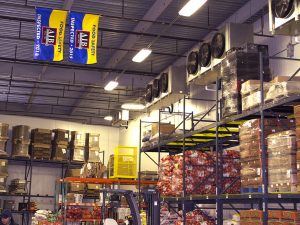
With New Regulations on the Horizon, the Cold Storage Industry Will Need to Adapt
As the EPA and other regulatory bodies discuss hydrofluorocarbons and other refrigerants with “global warming potential,” it will be up to those in the cold storage industry to future-proof their operations and focus on data to maintain profitability.
As Companies Continue to Alter Their Processes to Adhere to FSMA, Some Remain Skeptics
“I would assess this more as a band-aid than a cure-all.” That’s the opinion of John Bovay, a faculty member of UConn and a researcher who dissected the FSMA in a white paper for the journal Applied Economic Perspectives and Policy.
Recently Advanced Farm Bill Could Have Wide-reaching Impact on Produce & Floral Industries
The new food safety body would be made up of around 14,000 employees, with the budget authority of about $2.3 billion each year. This would be the result of combining the FSIS and the FDA.
Equipment Optimization: A Driving Force in High-Performance Buildings
The concept of energy efficiency at the commercial level is nearly a ubiquitous one in today’s landscape. Cutting costs is a high-priority goal for just about any entity.
Historically Cold Climate can Wreak Havoc on Air-Cooled Condensing Units
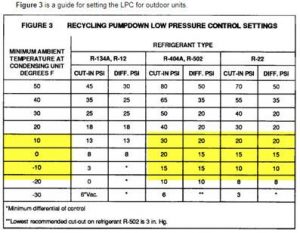
The use of low pressure refrigeration controls (LPC) is mostly found in smaller, refrigerated boxes such as beer coolers. LPC systems operating in low ambient temperatures may experience upset as system pressures are not sufficient to close normally adjusted LPC switches.
4 “Check Engine” Warnings for Your HVACR System
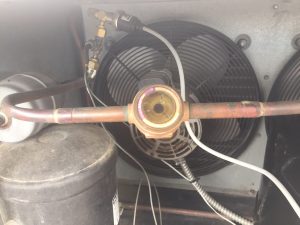
Refrigeration systems have a great deal of both mechanical and electrical components that need periodic maintenance to keep it running at its most optimal. The easiest comparison is to imagine your business’ refrigeration system as your car.
Energy Audits Reveal Areas Where Cold Storage Facilities Can Save Money
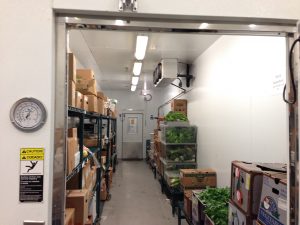
In many facilities, large refrigeration systems are running at 100% capacity and 24/7. This is an area for massive savings because there are controls products out there that automate run times and provide measures that more efficiently meet temperature requirements.
FDA Provides an Update on the new Produce Safety Rule
The Produce Safety Rule establishes first science-based food safety standards as it pertains to growing, harvesting, packing, and holding of produce intended for human consumption. Within the Produce Safety Rule, regulations were developed to affect six (6) main areas of commercial farms.